Walt Disney World Resort is the place to be this holiday season as theme parks and resort hotels sparkle with jolly decorations that bring the spirit of the season to life. Here's a sampling of the holiday fun in store for guests:
Disney's Hollywood StudiosGuests can get wrapped up in a Flurry of Fun at Disney's Hollywood Studios from Nov. 9-Dec. 31, with exciting new holiday happenings around the park and the return of the nighttime projection and fireworks show "Jingle Bell, Jingle BAM!"
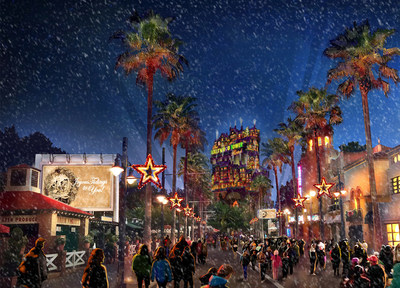
- NEW! Sunset Seasons Greetings – This new holiday experience features spectacular projections of Mickey, Minnie and other beloved Disney characters sharing their favorite Christmas stories as a snowy Sunset Boulevard twinkles with stunning holiday decorations. Holiday magic brings billboards to life and transforms the famous Hollywood Tower Hotel into scenes of the season – a giant pile of Christmas gifts, a gingerbread house and a frozen winter wonderland! A frosty summer-loving snowman might even make an appearance to share his holiday wish! This fantastic and heartwarming experience runs continuously throughout the night.
- NEW! Enhanced holiday décor around Echo Lake – Extra-large ornaments, colorful garlands and a giant Christmas tree centered on the water will make Echo Lake the merriest of places this holiday season. Even Dinosaur Gertie will be dressed for the occasion with a dino-sized Santa hat.
- "Jingle Bell, Jingle BAM!" Returns – The hit holiday show returns Nov. 9 sending beloved Disney animated characters on a spirited yuletide adventure to get Santa back to the North Pole in time for Christmas Eve. "Jingle Bell, Jingle BAM!" combines state-of-the-art projections, fireworks, special effects and Christmas music to create a dazzling, one-of-a-kind holiday experience for guests – capped by a special message from Santa himself.
- "Jingle Bell, Jingle BAM!" Dessert Party – Guests can wrap up their jolly holiday evenings with reserved viewing of the "Jingle Bell, Jingle BAM!" nighttime spectacular. The nightly party includes holiday-inspired snacks, delicious desserts, wine, beer, and specialty alcoholic and non-alcoholic beverages. A surprise Disney character will also join the fun, posing for pictures and signing autographs. This fun-filled special event is offered Nov. 9-Dec. 30, 2017. Book online at DisneyWorld.com/dining or call (407) WDW-DINE.
- A new friend joins the cast of 'For the First Time in Forever: A Frozen Sing-Along Celebration' – Holiday fun continues at the Hyperion Theater as Anna, Elsa and Kristoff welcome Olaf to this popular sing-along celebration. Just for the holidays the show will include all-new songs from Disney's new animated short "Olaf's Frozen Adventure."
- Minnie's Holiday Dine at Hollywood and Vine – Meet Minnie, Mickey, Daisy, Donald and Goofy for lunch and dinner celebrations centered on seasonal deliciousness. From Nov. 6-Jan. 7, the mouse-with-the-mostest will deck the halls for a banquet filled with holiday cheer and the joy of the season! To make a reservation, check availability and book online visit DisneyWorld.com/dining or call (407) WDW-DINE.
- Santa Claus returns to the Once Upon a Time shop Nov. 9-Dec. 24 – The beautiful vintage setting of the Once Upon a Time shop recalls bygone days of Santa's visits to great department stores across the country. Santa will be at the shop daily to greet guests and listen to holiday wishes. Santa Goofy will step in Dec. 25-Dec. 31 after Old Saint Nick returns to the North Pole.
EpcotHolidays Around the World is transforming into the Epcot International Festival of the Holidays from Nov. 9-Dec. 30, surrounding guests once again in the wondrous sights, sounds and flavors of the season.
- NEW! Holiday Kitchens – The number of holiday kitchens doubles in size this year to a total of 15, each bringing the flavors of the season to life. New this year, guests can indulge in cookies and desserts at the holiday kitchen located inside the Odyssey complex. Sweet treats include snowflake sugar cookies and a warm apple fritter with cinnamon ice cream and caramel sauce. Over at the Canada pavilion, dazzling delicacies like the Maple Buche de Noel (maple mousse rolled in gingerbread chiffon cake with cranberry sauce and pecan crumble) celebrate holiday traditions from the Great White North.
- NEW! Chip & Dale's Christmas Tree Spree – Chip and Dale are collecting ornaments for their Christmas tree. Guests can purchase a map and stickers from select merchandise locations and travel around World Showcase looking for the famous chipmunks with their ornaments. Guests can return their completed maps for a festive surprise, courtesy of Chip and Dale. Maps are available for $5.99 plus tax.
- NEW! Candlelight Processional Narrators – One of the most popular Epcot traditions returns with new celebrity narrators in 2017. Pat Sajak, Matt Bomer and CCH Pounder will join the lineup of returning favorites like Neil Patrick Harris, Whoopi Goldberg and Jaci Velasquez. The Candlelight Processional is a retelling of the Christmas story as told by a celebrity narrator accompanied by 50-piece orchestra and a mass choir. The show takes place at the America Gardens Theatre each evening at 5:00 p.m., 6:45 p.m. and 8:15 p.m. Nov. 24-Dec. 30. Candlelight dinner packages can be reserved by visiting DisneyWorld.com/holiday.
- NEW! Holiday Entertainment – Enjoy the sights and sounds of the nations of World Showcase, as each country's holiday heritage comes to life amid joyful music and time-honored traditions. Guests will discover an entertaining celebration of Hanukkah in a new location along World Showcase promenade, where a fun and interactive band interweaves the music of Hanukkah with jazz, Latin, rock and even hip-hop influences. Other returning holiday favorites include JOYFUL! A Gospel Celebration of the Season and Canadian Holiday Voyageurs.
- Fireworks Finale – The nightly fireworks display, IllumiNations: Reflections of Earth, will feature a special holiday ending.
Magic Kingdom
- A Frozen Holiday Wish – Behold an enchanting performance to melt a frozen heart. Royal sisters Anna and Elsa lead a celebration on the Castle Forecourt Stage nightly Nov. 9-Dec. 31. Featuring special appearances by rugged mountain man Kristoff and lovable snowman Olaf, this merry-and-bright seasonal show culminates in Queen Elsa using her incredible powers to present a gift to everyone in the kingdom – transforming Cinderella Castle into a glimmering, shimmering ice palace for the holidays.
- Mickey's Very Merry Christmas Party – It's a Christmas party like no other, with joyous music, a shimmering Cinderella Castle, characters in their festive finery and the Magic Kingdom decked out and made even more magical for merry-making guests of all ages. Each specially ticketed, limited-attendance event features an exclusive performance of Holiday Wishes fireworks and the earliest performances of other spectaculars like Mickey's Once Upon a Christmastime Parade, the Frozen Holiday Wish castle-lighting ceremony and Mickey's Most Merriest Celebration stage show. The special party – complete with cookies, cocoa and snow flurries – begins at 7 p.m., after regular park hours. Parties will be held on November 9, 10, 12, 14, 16, 17, 26 and 28, and December 1, 3, 5, 7, 8, 10, 12, 14, 15, 17, 19, 21 and 22.
For more information and to purchase tickets for this after-hours party, visit DisneyWorld.com/Christmasparty. - Mickey's Once Upon a Christmastime Parade – This enchanting holiday pageant sings and dances its way through the Magic Kingdom park daily Dec. 23-Dec 31. It also makes a special appearance at each Mickey's Very Merry Christmas Party. Brimming with magic and cheer, the parade features Santa Claus, gingerbread men, elves, reindeer, toy soldiers and other friends from the North Pole. They all join Mickey and friends – including Arendelle favorites Anna, Elsa, Kristoff and Olaf – in an over-the-top celebration of the season.
- Mickey's Most Merriest Celebration – From Dec 23-Dec. 31, Mickey and Minnie take to Cinderella Castle Forecourt Stage where they host some of their Disney friends for an unforgettable Christmas soiree filled with classic and contemporary holiday songs. Magical holiday projections on Cinderella Castle build to a sensational, snowy finale. Performances are also featured during each Mickey's Very Merry Christmas Party.
Disney's Animal KingdomIt's a wild holiday time as decorations around the park frame new day-into-nighttime experiences, including Tree of Life transformations, Kilimanjaro Safaris, Kali Rivers Rapids and Expedition Everest. Guests will be greeted by a dramatic, animal-themed holiday tree, and festive garlands will have the park all a-glow with merriment.
Disney SpringsEvery corner of Disney Springs is wrapped and ready for the season with holiday décor and special entertainment, making it the most wonderful place to shop. From top name-brands to cozy one-of-a kind retailers and, of course, all things Disney, there's something for everyone. Busy shoppers can also take a break and enjoy a quick snack on the go or an unforgettable meal at one of Disney Springs many talked-about restaurants.
Here's a sampling of what's new:
- NEW! An Even Bigger Christmas Tree Trail – To capture the spirit of the season, Marketplace guests can stroll among custom decorated holiday trees, each dedicated to a popular Disney theme. This year, the Christmas Tree Trail will expand to include ten new trees inspired by Disney classics such as Sleeping Beauty, Peter Pan, Snow White and Dumbo.
- Santa's Chalet – Santa Claus is accepting Christmas wish lists and welcoming guests to his chalet newly located by the Christmas Tree Trail. From Dec. 25-Dec. 31, Santa Goofy will take over after Old Saint Nick heads back to the North Pole.
- Stitch's Holiday Gift Hunt – The mischievous experiment 626 returns to Disney Springs with an expanded scavenger hunt now featuring four new stops, including a special stop at the expanded Christmas Tree Trail.
Holiday Fun beyond the Parks: The warmth of the holiday season brings cheer to more than 25 Disney resorts.
Every resort across Walt Disney World is decked out for the holidays. Entertainment abounds, including carolers performing on select nights at many resorts.
- At Disney's Wilderness Lodge, guests can take in the grandeur of quintessential Pacific Northwest yuletide cheer beneath the towering lobby Christmas tree, as they cozy up to the fire and relax with a cup of hot cider and snack on holiday treats. They can also relax lakeside and enjoy a seasonal cocktail at Geyser Point Bar & Grill, then settle around the campfire with s'mores and hot chocolate at nightfall.
- At Disney's Fort Wilderness Resort and Campground, the Hoop-de-Doo Musical Revue spruces up for the season with live holiday music by the Pioneer Hall Players, including favorites like "There's No Place Like Home for the Holidays" and "Another Tennessee Christmas." On select nights, the campground's beloved carolers arrive by hay wagon spreading holiday cheer to all.
Resort guests can also experience life-sized edible creations at select Walt Disney World Resorts.
- An annual treat, at Disney's Grand Floridian Resort & Spa, is a life-sized holiday gingerbread house. This eye-filling (and aromatic) sight is in the resort lobby and is home to The Bake Shop that uses a classic gingerbread recipe from Austria for its tasty cookies and ornaments.
- A life-sized, edible spinning carousel is a holiday tradition at Disney's Beach Club Resort, while a holiday village with miniature train takes center stage at Disney's Yacht Club Resort.
Three all-new New Year's Eve Celebrations coming to Disney's Contemporary Resort:
- "Disney Countdown to Midnight" includes delightful dining, live music, libations and more. An interactive band and DJ will fill the dance floor (and we hear that Mickey and Minnie may make a special appearance). Then welcome in 2018 with a flute of bubbly and a viewing of those legendary New Year's Eve fireworks in Magic Kingdom Park. Hours are 8 p.m. to 12:15 a.m. in the Fantasia Ballroom. This party is designed for guests 18 and older.
- PIXAR PARTY– A New Year's Eve Celebration: This party celebrates beginnings with a Disney Pixar-inspired dinner the entire family is sure to enjoy. This unique celebration lets families ring the New Year together. It features a buffet-style dinner, Disney characters, activities for the little ones, a trendy DJ and exclusive viewing of Magic Kingdom fireworks!
- "Down in New Orleans: A Disney New Year's Eve Dining Experience" in the Grand Republic Ballroom is a fine-dining experience inspired by the Disney animated film "The Princess and the Frog." Toward the end of the evening an amazing vocalist, reminiscent of Tiana, joins the band to bring to life the Academy Award-winning classics of legendary composer, Randy Newman. Guests can then slip outside with a glass of bubbly just before midnight to ring in 2018 with a private viewing area for the Magic Kingdom Park fireworks. Hours are 7 p.m. to 12:15 a.m.